How Does Professional Hornet Control Safely Remove Nests From Trees and Rooflines
Professional hornet control removes nests from trees and rooflines by identifying the hornets, assessing the nest’s location, and selecting an appropriate removal method. Because bald-faced hornets can aggressively defend their colonies, nests near entrances, walkways, and other frequently used areas should be handled by trained pest control professionals rather than disturbed by homeowners.
Why Are Hornet Nests in Trees and Rooflines a Concern?
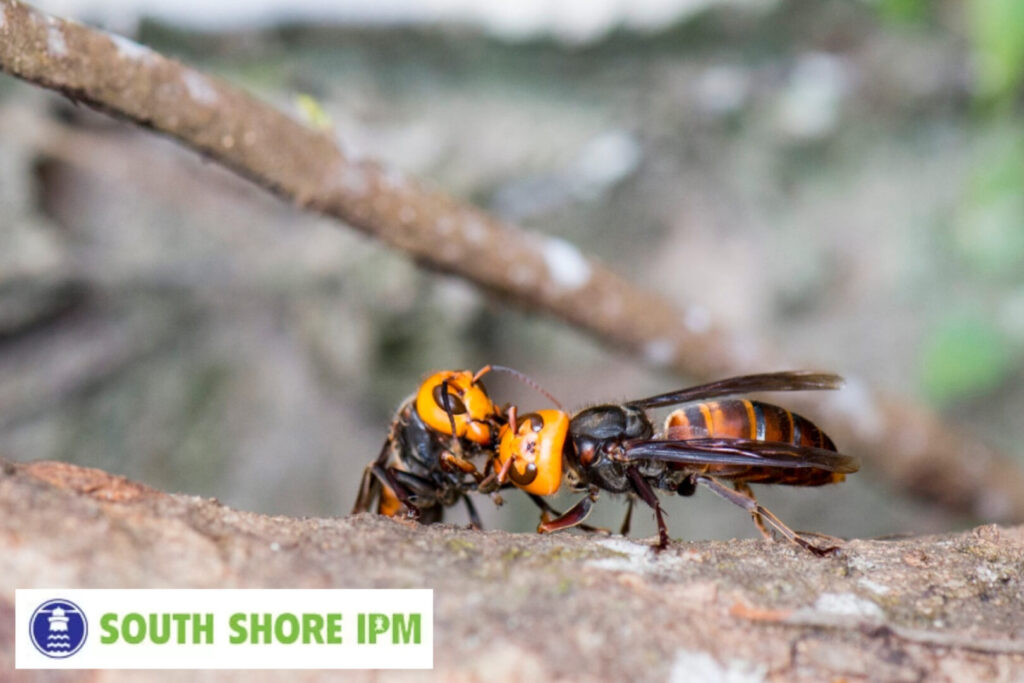
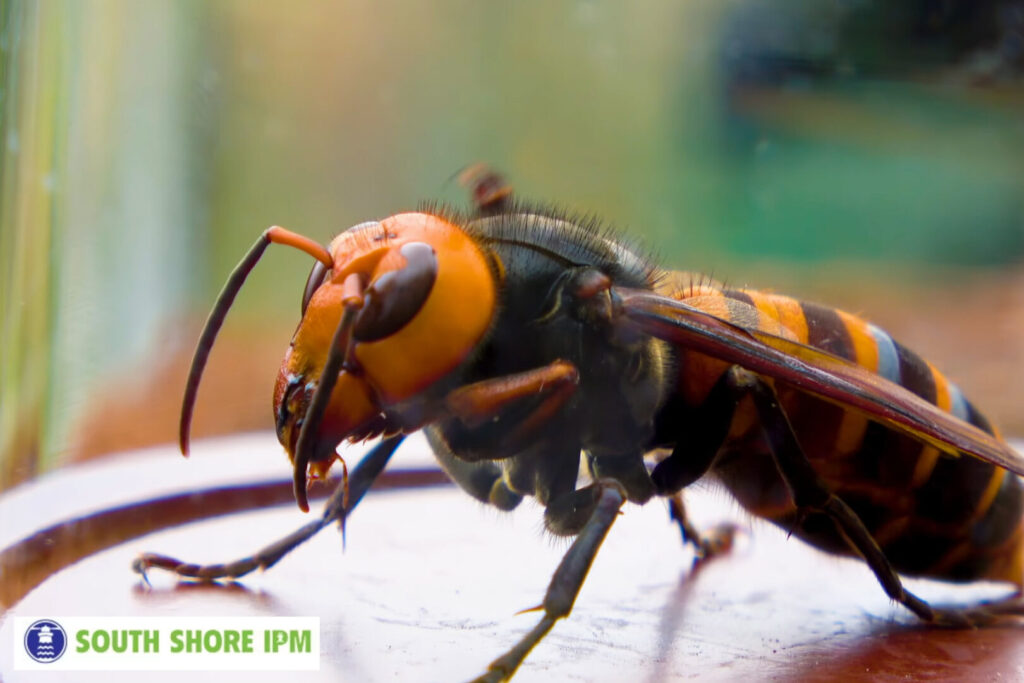
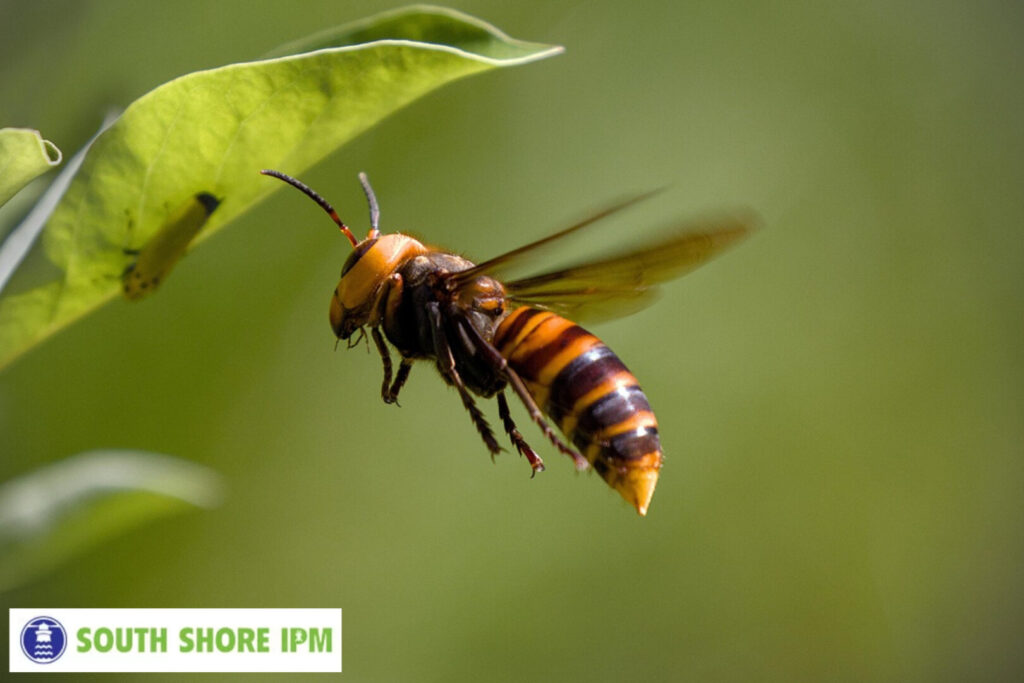
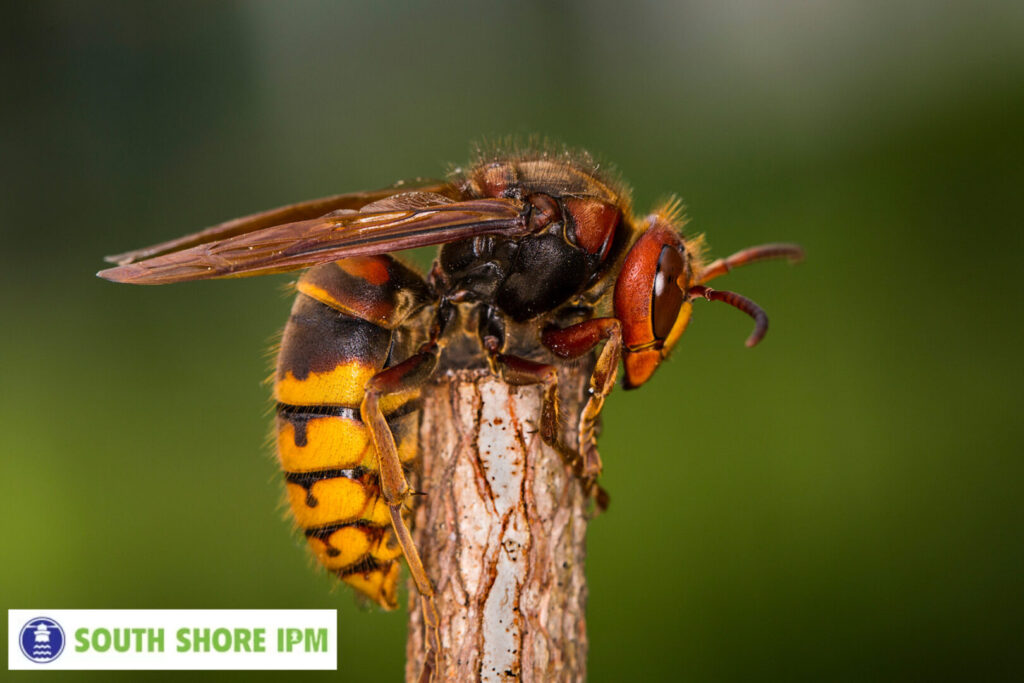
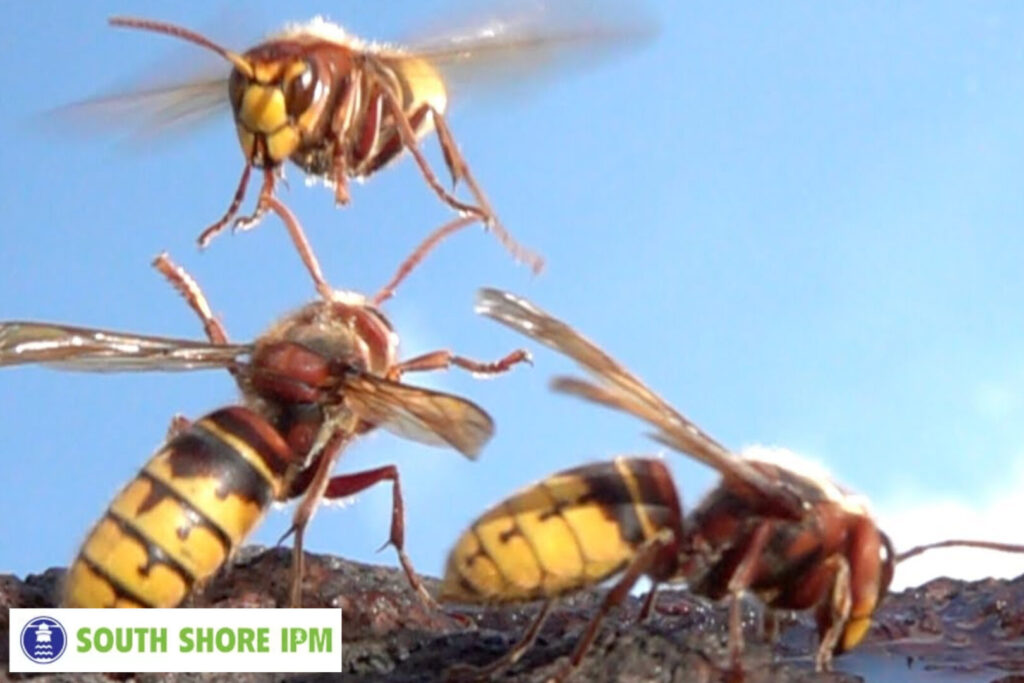
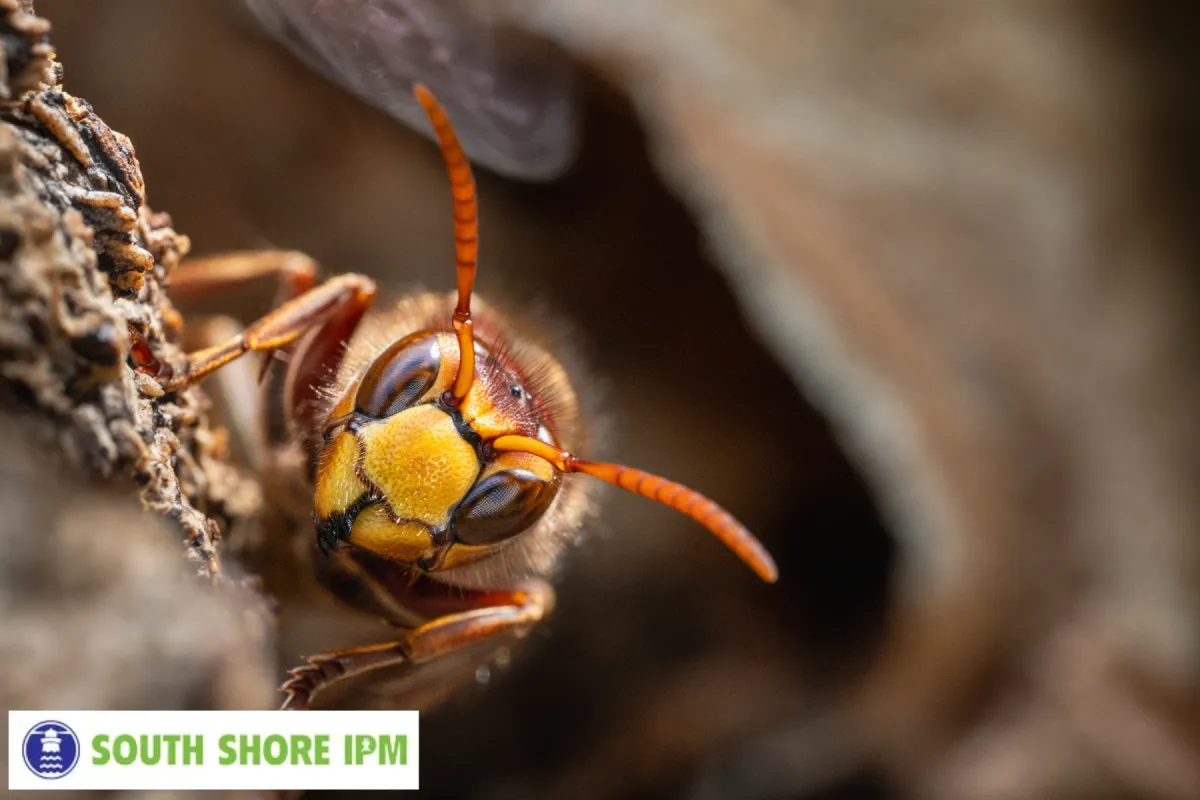
Bald-faced hornets are a type of social wasp commonly found throughout North America, including New England. They have distinctive white markings on their faces and dark bodies. Unlike insects that generally avoid people, these hornets may attack repeatedly when they perceive a threat to their nest.
Their nests are made from wood fibers mixed with saliva, creating a paper-like material. Nests are commonly found hanging from tree branches, tucked into shrubs, or attached to the exterior of buildings.
The location of a nest often determines the level of concern. A nest high in an isolated tree may receive little foot traffic, while one near a doorway, patio, roofline, or walkway can create a greater risk of accidental encounters.
In Duxbury, homeowners may discover nests in landscaping, mature trees, or around the exterior of their homes. Regularly checking these areas from a safe distance can help identify a developing problem before the nest becomes a greater concern.
How Does Professional Hornet Control Remove Nests Safely?
Professional removal involves more than simply reaching a nest and taking it down. A technician must evaluate the hornet activity, the nest’s position, and the safest way to approach the problem.
1. Identify the Hornets and Locate the Nest
The first step is identifying the insect and locating its nest. Bald-faced hornets can be recognized by their black-and-white coloring and the enclosed, paper-like nests they build.
Technicians assess visible hornet activity and examine the surrounding area from a safe distance. This helps determine whether the nest is active and whether other hazards could affect the removal process.
Correct identification matters because different stinging insects may require different treatment methods. A nest should not be disturbed simply because it resembles a hornet nest.
2. Assess the Nest’s Location and Accessibility
A nest hanging from a low tree branch presents different access concerns than one attached beneath a roofline. Professionals consider the nest’s height, nearby structures, surrounding vegetation, and proximity to people.
They may also evaluate whether the work area can be safely controlled during removal. Roof edges, ladders, overhead branches, and restricted access can increase the complexity of the job.
For homeowners in Duxbury, a nest near a frequently used entrance or outdoor seating area deserves prompt attention. Keeping people and pets away from the immediate area helps reduce the chance of disturbing the colony before a professional arrives.
3. Select an Appropriate Treatment Method
After assessing the nest, the technician determines the appropriate treatment and removal procedure. The method depends on the insect, the nest’s location, the level of activity, and the conditions surrounding the property.
South Shore IPM offers pest control in Duxbury, MA, and organic solutions. The appropriate option should be discussed with the technician, including how the treatment will be applied and what precautions are necessary.
Homeowners should not attempt to knock down, burn, or seal an active nest. Disturbing the colony can trigger defensive behavior, and an inaccessible nest may require specialized equipment or a different removal approach.
4. Check the Area and Explain Any Follow-Up
After the treatment process, the technician can assess the area for remaining hornet activity and explain whether additional monitoring or follow-up is appropriate.
Homeowners should follow the technician’s instructions about keeping away from the treated area and recognizing signs that warrant another inspection. Removing a visible nest does not automatically mean that all hornet activity has stopped, so the situation should be evaluated before the area is considered safe to approach.
What Is the Difference Between Removing Nests From Trees and Rooflines?
The basic goal is the same: address the hornet colony while reducing the risk to people and property. However, the location affects access, safety precautions, and the work involved.
| Consideration | Nests in Trees | Nests Along Rooflines |
| Common locations | Hanging branches and dense shrubs | Eaves, roof edges, and exterior building surfaces |
| Main access concern | Branch height and surrounding vegetation | Roof height, ladders, and restricted access |
| Nearby hazards | Garden areas, yards, and outdoor seating | Entrances, windows, walkways, and elevated work areas |
| Removal considerations | Branch placement and safe access around the nest | Building features, working height, and access limitations |
A nest’s location alone does not determine how dangerous it is. Hornet activity, proximity to people, and the conditions surrounding the nest all influence the appropriate response.
If a nest is near an entrance or an area where children and pets regularly spend time, avoid using that space until a professional has assessed the situation.
What Should Homeowners Do Before a Hornet Nest Is Removed?
The safest immediate response is to leave the nest undisturbed and arrange a professional assessment.
Until help arrives:
- Keep your distance. Avoid standing beneath a nest or approaching it to take close-up pictures.
- Keep children and pets away. Redirect foot traffic around the affected area without approaching the nest.
- Do not knock the nest down. Physical disturbance can provoke defensive hornets.
- Avoid blocking the nest entrance. Do not seal openings or attempt to trap the insects inside.
- Do not use fire or household products. Improvised removal methods can create additional hazards.
- Tell the technician where you observed activity. Share information from a safe distance, including whether the nest is near a doorway, roofline, or frequently used part of the yard.
If someone is stung, move away from the nest without further disturbing the colony. For a typical local reaction, a cold pack may help reduce swelling. Seek emergency medical care for difficulty breathing, swelling of the tongue or throat, faintness, or other signs of a severe allergic reaction. Multiple stings also warrant prompt medical advice.
What Factors Affect the Cost of Professional Hornet Nest Removal?
The cost of removing a hornet nest depends on the work required, not simply on the size of the visible nest.
| Cost Factor | Why It Matters |
| Nest location | A nest attached to a difficult-to-reach roofline may require more work than one in an accessible location. |
| Height and access | Elevated nests or areas with limited access can increase the complexity of removal. |
| Hornet activity | The technician must consider whether the nest is active and what precautions are appropriate. |
| Site conditions | Nearby entrances, landscaping, structures, and pedestrian areas may affect how the work area is managed. |
| Additional service needs | Follow-up visits or other recommended work may affect the total price. |
A professional assessment helps clarify the work involved and the available options. South Shore IPM emphasizes cost-effective solutions, meaning homeowners can discuss the situation and understand the recommended approach rather than relying on a one-size-fits-all service.
When requesting a quote, describe the nest’s location and the hornet activity you have observed. Do not climb, approach the nest, or disturb it to gather more details.
Myth vs. Fact: A Hornet Nest Is Safe When No Hornets Are Flying Around
Myth: If no hornets are visible outside the nest, it is safe to remove it.
Fact: A lack of visible activity does not establish that a nest is inactive or safe to handle. Hornets may be inside the nest or temporarily out of sight. The colony’s status should be assessed before anyone attempts removal.
Another common misconception is that a nest becomes harmless when it is small. A developing colony can still defend itself, and the nest’s proximity to people may make it a concern even before it reaches maturity.
The safest approach is to avoid handling the nest and have a qualified professional evaluate it.
How Does South Shore IPM Approach Hornet Control?
South Shore IPM combines its experience in pest control in Duxbury with practical recommendations tailored to the property. Its approach centers on four service priorities that matter when homeowners need help with a potentially aggressive stinging insect.
Over 50 Years of Combined Experience
South Shore IPM brings over 50 years of combined experience to its work. That experience supports a careful assessment of the pest problem, the conditions around the property, and the work needed to address it.
For hornet nest removal, the goal is to evaluate the situation rather than assume every nest can be handled in the same way. A nest in a tree and one beneath a roofline may require different access and safety considerations.
Cost-Effective Solutions
Cost-effective service means considering the actual conditions before recommending a course of action. Nest height, accessibility, hornet activity, and the surrounding environment all help determine the work involved.
Homeowners should receive a clear explanation of the recommended service and any expected follow-up. This makes it easier to understand the proposed solution and decide how to proceed.
Exceptional Customer Service
Exceptional customer service starts with listening to the homeowner’s concerns and explaining the next steps in straightforward language. A technician should help the customer understand why the nest needs attention, what the removal process involves, and which precautions to follow.
For residents seeking Duxbury pest control, clear communication is particularly valuable when a nest is close to an entrance, patio, or another regularly used area. Knowing what to expect can make the process less stressful.
Organic Pest Control Solutions
South Shore IPM states that it offers organic pest control solutions for homes and offices. When discussing hornet control, homeowners can ask which options are suitable for their specific situation and what precautions apply to people, pets, and the surrounding area.
The appropriate treatment depends on the insect and the nest’s location. Any product or treatment should be selected and applied according to its label and the conditions at the property, rather than assuming one approach is suitable for every nest.
How Can Homeowners Reduce the Chance of Future Hornet Nests?
No preventive measure can guarantee that hornets will not build another nest. However, a few practical steps can make a property less inviting and help homeowners notice activity sooner.
- Inspect outdoor areas from a safe distance. Periodically look at tree branches, shrubs, eaves, and other sheltered exterior locations.
- Manage exposed food. Cover food and sugary drinks during outdoor gatherings, and clean up spills promptly.
- Secure garbage. Use tightly closed trash containers to limit access to food waste.
- Check for insect activity. Flowering plants and other areas that attract insects may also attract hornets searching for prey.
- Avoid disturbing developing nests. If you notice repeated hornet activity around one spot, observe from a distance and arrange an assessment if a nest may be present.
- Address recurring problems. If hornets repeatedly nest near the same part of the property, ask a pest control professional whether additional inspection or preventive measures are appropriate.
In Duxbury, checking sheltered areas around the home as part of regular outdoor maintenance can help homeowners spot nests before they become a bigger concern. If hornets are repeatedly gathering near a roofline or tree, do not assume they will leave on their own.
People Also Ask: Professional Hornet Control
Are bald-faced hornets dangerous?
Bald-faced hornets can sting repeatedly and aggressively defend their nests when they perceive a threat. A nest near an entrance, walkway, or outdoor gathering area should be assessed carefully. People with known sting allergies should take particular care to avoid exposure.
Where do hornets usually build their nests?
Bald-faced hornets commonly build enclosed, paper-like nests in trees, shrubs, and on building exteriors. Nests may hang from branches or attach to areas around rooflines. Their location and accessibility influence how a professional can safely address them.
Should I remove a hornet nest myself?
It is safer to have an active hornet nest assessed by a pest control professional. Knocking down a nest, blocking its entrance, or disturbing it with household products can provoke defensive behavior and increase the risk of stings.
When are hornets most active?
Hornet colonies generally develop during the warmer months. Activity and colony size can change as the season progresses, so a nest that appears small early on may become more substantial later. The absence of visible hornets at a particular moment does not confirm that the nest is inactive.
What attracts hornets to a property?
Hornets may be drawn to sheltered nesting locations, flowering plants, sugary foods and drinks, uncovered garbage, and areas where other insects are available as prey. Reducing accessible food and keeping outdoor areas clean can help, but it will not eliminate every possible nesting location.
How much does professional hornet nest removal cost?
The price depends on factors such as the nest’s height, location, accessibility, and the work required. A professional assessment is the best way to understand the recommended service and obtain a quote for the specific situation.
Get Professional Help With Hornet Nest Removal
A hornet nest in a tree or along a roofline can make it difficult to use parts of your property comfortably. Attempting removal without the right training and equipment can increase the risk of being stung, especially when the colony is active.
South Shore IPM provides pest control services with an emphasis on experience, cost-effective solutions, exceptional customer service, and organic pest control options. If you have found a nest or noticed repeated hornet activity around your property, contact the team to discuss the situation and request a quote.
For homeowners looking for pest control, South Shore IPM can help assess the concern and explain the next steps. Contact us today to get started.
Do not disturb the nest while waiting for professional assistance. Keep people and pets away from the area until it has been assessed.