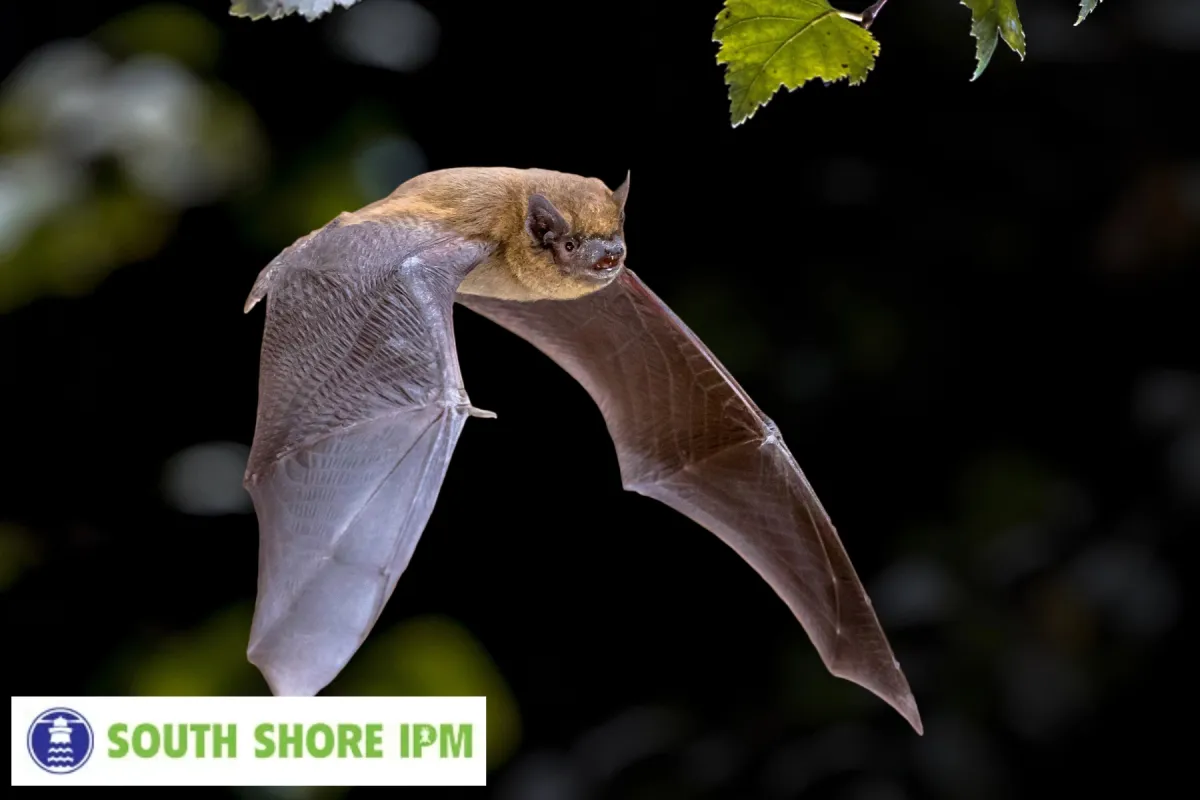
How Does Echolocation Help Bats Navigate and Hunt in Complete Darkness
Echolocation helps bats navigate and hunt in complete darkness by emitting high-frequency ultrasonic sound pulses through their mouth or nose and analyzing the returning echoes. By measuring the time delay, frequency shift, and amplitude of echoes, they construct a high-resolution 3D acoustic image of obstacles and flying insects in real time.
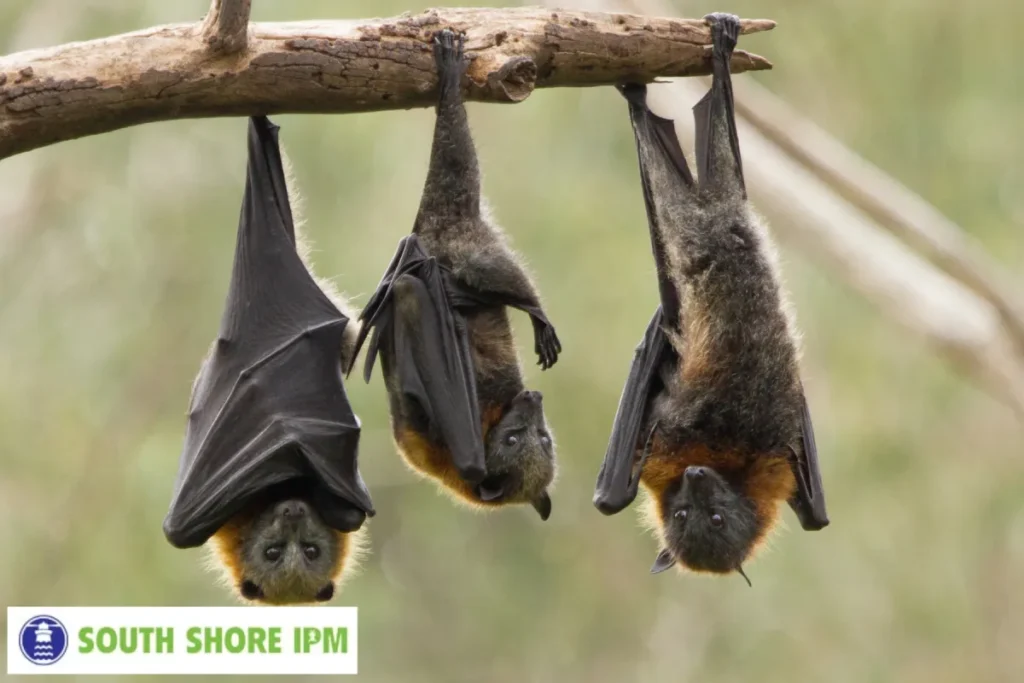
When the sun goes down, millions of nocturnal creatures take to the skies. Among the most fascinating of these animals are bats. While humans rely heavily on sight to move around, they fly through pitch-black forests, navigate tight caves, and snag tiny insects out of mid-air without crashing into a single branch. They achieve this incredible feat using a natural biological sonar system known as echolocation.
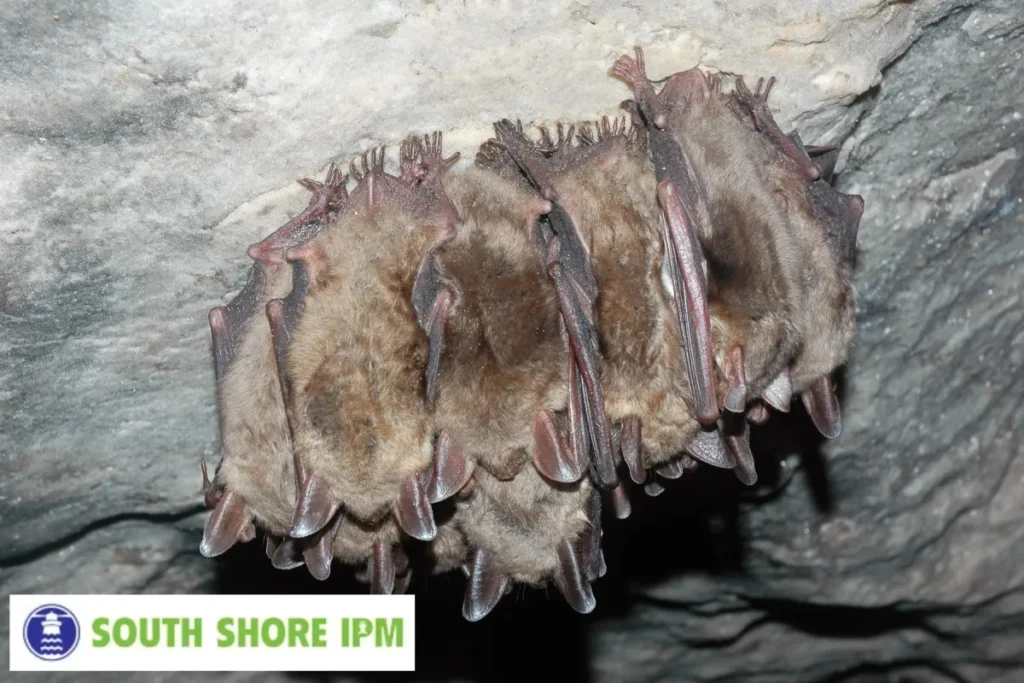
For many homeowners, watching bats sweep across the night sky is a wonderful display of nature. However, when these skilled night flyers decide that an attic, chimney, or roof gable makes a great roosting spot, their presence can quickly turn into a worry. Understanding how they use acoustic waves to sense their surroundings gives us deep insight into how they live, and explains why removing them from living spaces requires a specialized, gentle approach.
Here is a clear look at the biology of bat echolocation, how these creatures hunt so efficiently in the dark, common myths about bat vision, and how humane wildlife management keeps your home safe and bat-free.
Search Phase vs. Terminal Feeding Buzz: Echolocation Acoustic Comparison
As a bat moves from general cruising to active hunting, its echolocation calls change rapidly in speed, duration, and pitch.
During a recent home inspection for a family in Marshfield, our team examined an attic space where roosting bats had found a tiny gap beneath the roofline. As twilight approached, we listened to the high-frequency acoustic activity near the roof eaves using specialized bat detectors. The transition from steady navigation chirps to high-speed feeding buzzes clearly showed how these animals pinpoint flying prey in seconds before returning to their roost.
Here is how a bat adapts its acoustic signals during different phases of flight and hunting:
| Acoustic Parameter | Search Phase (Navigation) | Approach Phase (Prey Tracking) | Terminal Buzz (Prey Capture) |
| Pulse Emission Rate | Low (5 to 10 pulses per second) | Moderate (20 to 50 pulses per second) | Ultra-High (up to 200 pulses per second) |
| Pulse Duration | Long (10 to 100 milliseconds) | Medium (2 to 10 milliseconds) | Ultra-Short (less than 1 millisecond) |
| Acoustic Function | General spatial orientation and obstacle avoidance | Calculating prey distance, speed, and trajectory | High-resolution pinpoint targeting milliseconds before impact |
| Frequency Modulation | Broad constant frequency (CF) or gentle sweep | Steeper frequency modulation (FM) sweeps | Short, rapid frequency modulations |
| Spatial Resolution | Coarse (detects tree branches, cave walls, open paths) | Medium (tracks insect flight path and wingbeat) | Fine (resolves micro-details of insect body structure) |
The 5 Biological Steps of Bat Echolocation and Target Interception
To navigate and hunt without light, bats rely on a precise five-step biological feedback loop that processes acoustic information in milliseconds.
1. Ultrasonic Laryngeal Pulse Emission
Bats produce high-frequency ultrasonic sound calls (ranging from 20 kHz to over 120 kHz) using specialized throat muscles, pushing the sound outward through the mouth or complex nose structures.
2. Acoustic Wave Propagation and Target Reflection
Emitted sound waves travel through pitch-black air, bouncing off solid objects, leaves, rooflines, and flying insects like moths, mosquitoes, and beetles.
3. Binaural Echo Capture and Frequency Analysis
Returning echoes are caught by large, specially shaped ears and directed to inner ear structures that can pick up micro-adjustments in volume and pitch.
4. Doppler Effect and Time Delay Processing
The bat’s brain calculates distance based on time delay and measures relative speed using pitch shifts, instantly revealing if target insects are moving away or flying closer.
5. 3D Spatial Mapping and Flight Adjustment
By combining sound intensity and pitch cues, the brain constructs a real-time, three-dimensional mental map of the area, allowing the bat to dodge obstacles and catch prey mid-flight.
Applying Our South Shore IPM Humane Exclusion Protocol to Solve This
At South Shore IPM, we believe that protecting your property should always go hand-in-hand with caring for local wildlife and the environment. Bats are essential to our local ecosystem because a single bat can consume thousands of mosquitoes and flying pests every night. Because bats are protected animals, killing or trapping them inside a building is both harmful and illegal.
Drawing on over 50+ years of experience, our team relies on a thoughtful, eco-friendly approach that allows bats to leave your home naturally while preventing them from coming back inside. Homeowners trust our pest control in Marshfield, MA for humane, effective bat exclusion that protects both their property and local wildlife.
Here is how our humane wildlife protocol protects your living spaces:
- Comprehensive Eave & Attic Auditing: We perform a complete inspection of your rooflines, chimney flashings, gable vents, and fascia boards to map out every active entry point and potential gap.
- Installing One-Way Exclusion Devices: Rather than trapping animals inside, we install an excluder over primary entry gaps. This device features a specialized, funnel-shaped “door” that allows roosting bats to fly out freely at night to hunt using echolocation, but prevents them from slipping back inside when they return.
- Building a Full Exterior Barrier: While the exclusion devices are active, we seal all secondary gaps, cracks, and structural seams across your roofline using durable, weather-proof materials to build a complete exterior barrier.
- Ongoing Exterior Treatments & Seasonal Care: Once the bats have safely moved back to natural roosting sites in the wild, we provide ongoing exterior treatments and structural monitoring as part of our seasonal protection plans, ensuring your home stays sealed year-round.
While evaluating a home for a family, our technician discovered a small maternity colony roosting beneath a cozy attic roof ridge. By installing a custom, funnel-shaped exclusion door, we allowed the bats to leave safely at dusk to forage across local wetlands. Once every bat had safely exited, we sealed the entry gaps permanently, restoring complete peace of mind to the homeowners without harming a single animal. This humane approach is a hallmark of effective Marshfield pest control, helping homeowners resolve bat infestations while preventing future re-entry.
Debunking the Myth: “Bats Are Completely Blind and Rely Only on Echolocation”
A common myth that has circulated for generations is the phrase “blind as a bat.” Many people assume that because bats use sonar to hunt at night, their eyes do not work at all.
Here is the truth behind bat vision and navigation:
- Fully Functional Eyesight: All bat species have working eyes, and many insect-hunting bats actually possess sharp vision adapted for low-light dusk and dawn conditions.
- Dual Navigation Systems: Bats use vision alongside echolocation. When traveling long distances or migrating across open country, they navigate using the horizon, celestial light, and major land contours rather than relying solely on high-frequency sound calls.
- Megabats Don’t Echolocate: Larger fruit bats (often called flying foxes) rely almost entirely on keen eyesight and a powerful sense of smell to locate fruit trees and flowers, lacking the ability to echolocate altogether.
Echolocation Biology Specifications & Technical Feature Glossary
Understanding key biological terms helps clarify how these flying mammals sense their world with such impressive accuracy:
Frequency Modulation (FM) Sweeps
Rapid downward shifts in sound pitch within a single call, helping the bat gather precise detail about a target’s location, distance, and surface texture.
Constant Frequency (CF) Signals
Continuous, single-pitch sound pulses used primarily to detect target movement and wingbeat flutter via pitch shifts.
Tragus
A small, upright flap of skin inside the ear opening of echolocating bats that helps determine vertical height by creating subtle echo reflections.
Target Interception
The final flight adjustment phase where a bat calculates a moving insect’s exact flight path and swoops in to catch it using its wing or tail membranes.
People Also Ask (FAQ)
Why can’t humans hear bat echolocation calls?
Most bat echolocation calls range from 20 kHz to well over 120 kHz. This is far above the upper limit of human hearing, which usually tops out around 20 kHz in young adults and decreases as we age.
How do bats avoid deafening themselves with their own loud calls?
Just microseconds before making a loud call, a bat contracts tiny middle ear muscles to dampen incoming sound. It instantly relaxes these muscles a split second later to listen for the faint returning echo.
Can moths and other insects tell when a bat is tracking them?
Yes. Several species of night-flying moths have evolved simple ears tuned specifically to bat ultrasonic frequencies. When they detect a bat’s approach, they perform sudden diving maneuvers or drop straight to the ground to escape..
Protect Your Home and Preserve Local Wildlife
Understanding how bats use echolocation shows just how remarkably adapted these creatures are for life in the dark. While their natural insect-hunting abilities benefit our neighborhoods by keeping mosquito populations under control, human living spaces and attics need to remain protected.
At South Shore IPM, we are dedicated to delivering safe, eco-conscious pest and wildlife solutions tailored to your family’s needs. Our team focuses on friendly service, minimal indoor product use, and strong exterior protection to keep your living areas safe and comfortable.
Whether you need help managing roosting wildlife, want targeted pest control in Marshfield, or are looking for reliable seasonal care, we are here to support you every step of the way. For trusted, professional, you can count on our experienced team to treat your home with care and respect.
Ready to secure your home with safe, reliable, and eco-friendly solutions? Contact us today to schedule your consultation or request a free quote from South Shore IPM!